
Libre DT-Lab
My Laboratory for Learning and Experimentation
Welcome to the page dedicated to Libre DT-Lab. More than just a variant of Darktable, this space serves primarily as my personal laboratory: a place to explore, learn, understand, and experiment with RAW development and open-source image processing.
Learn and Experiment
The world of image processing and color management is vast and fascinating. Libre DT-Lab was born out of a simple desire: to dive deep into the inner workings of Darktable to test ideas, tinker with the code, and directly observe how the algorithms behave when applied to RAW files.
This approach is based on a few principles:
- Understanding the mechanics: exploring how color spaces, dynamics, and sensor rendering are handled.
- Testing new approaches: modifying or adjusting tools to observe their actual impact on the image’s content.
- Sharing discoveries: documenting my learning journey and sharing the approaches that prove successful.
This lab allows me to explore new approaches in the image processing pipeline. Here are the main projects currently under study:
- An update to the Base Curve module (learn more): The idea here is to experiment with a base curve tailored to modern linear workflows, drawing inspiration from the rendering curves of the ACES cinema standard. The module intelligently adjusts the handling of very bright highlights to avoid crushing areas that are already bright. This allows me to explore better preservation of tonal nuances in the whites, while correcting saturation and color shifts in highly exposed areas.
- Contrast & Texture: Based on experimental work by the community, this tool allows me to test a “detail-scale” approach to contrast processing. Instead of applying a harsh global contrast, it separates the image into several levels: from micro-details to larger structures. The goal is to explore a more natural rendering of sharpness and textures, while experimenting with colorimetric contrast adjustments (such as warm/cool separation).
- 3D Colorimetric Film (learn more): is a tonal rendering module based on the ACES 2.0 SSTS curve and three-dimensional color manipulation to explore the precise control and conversion of color spaces. This module is also available as a CTL script for ART
- ACES 2.0 Integration (Output Transform): Testing of a dedicated rendering module based on the official ACES 2.0 specification. Unlike previous versions of ACES or methods based on fixed LUTs, ACES 2.0 uses a color appearance model (based on CAT16 / Hellwig CAM). This allows for progressive compression of the gamut and chrominance based on hue and luminance, ensuring very smooth transitions in highlights without artificial color shifts or abrupt breaks. The module remains true to the Unix philosophy: a very minimalist interface that focuses on reference tonal rendering, leaving creative adjustments to the other modules in the pipeline.
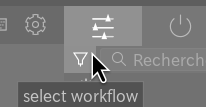
- Workflow Selector (tone mapping): To make it easier to compare the different tone mapping engines I’m experimenting with, the toolbar now includes a tone mapping selector. With a single click, you can switch between different approaches—filmic, sigmoid, AgX, basic curve, 3DCF, or ACES 2.0—without having to open or configure each module manually. The selector handles everything: it deactivates the current engine, loads and expands the selected one, and then switches the associated module group. The idea is to be able to observe how each curve “sculpts” the light on the same image and to compare the rendering, highlights, and color accuracy before making a choice. The setting is saved in the current workflow and synchronized with the quick access panel.
Source Code Sharing
In keeping with the philosophy of free culture that drives vision-libre.fr, all work carried out in this lab remains open:
- Source code and working notes: available on the GitHub repository.
- The README_Libre_DT-Lab.md file contains technical information and notes related to my experiments.